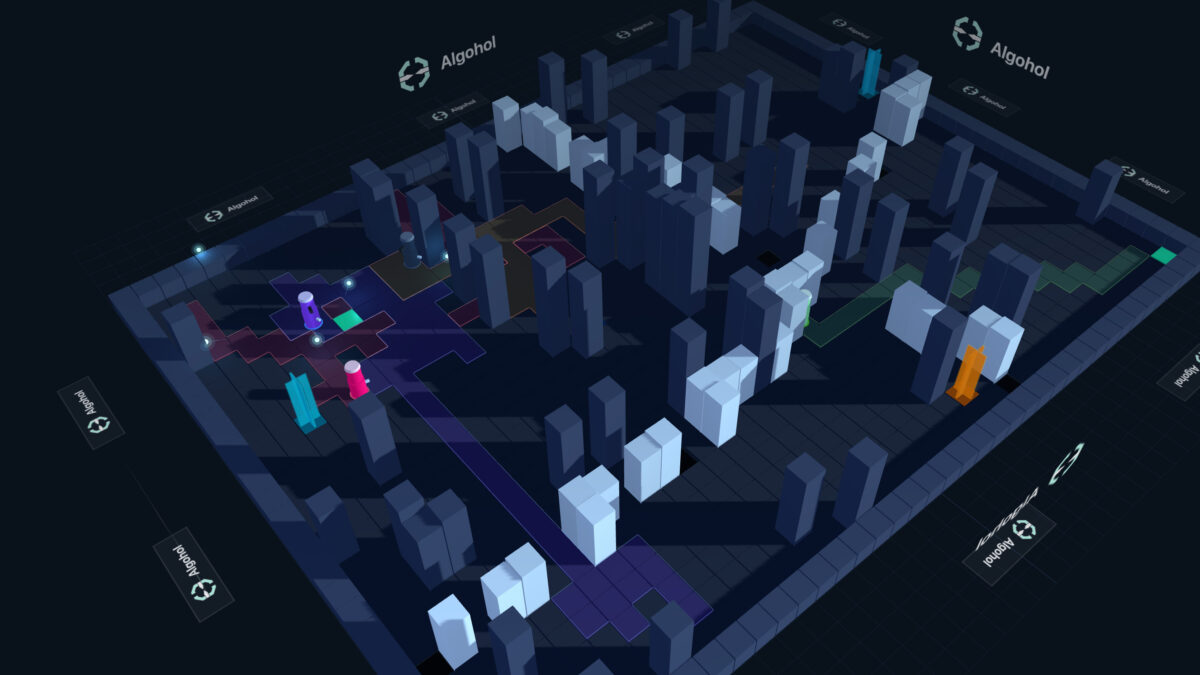
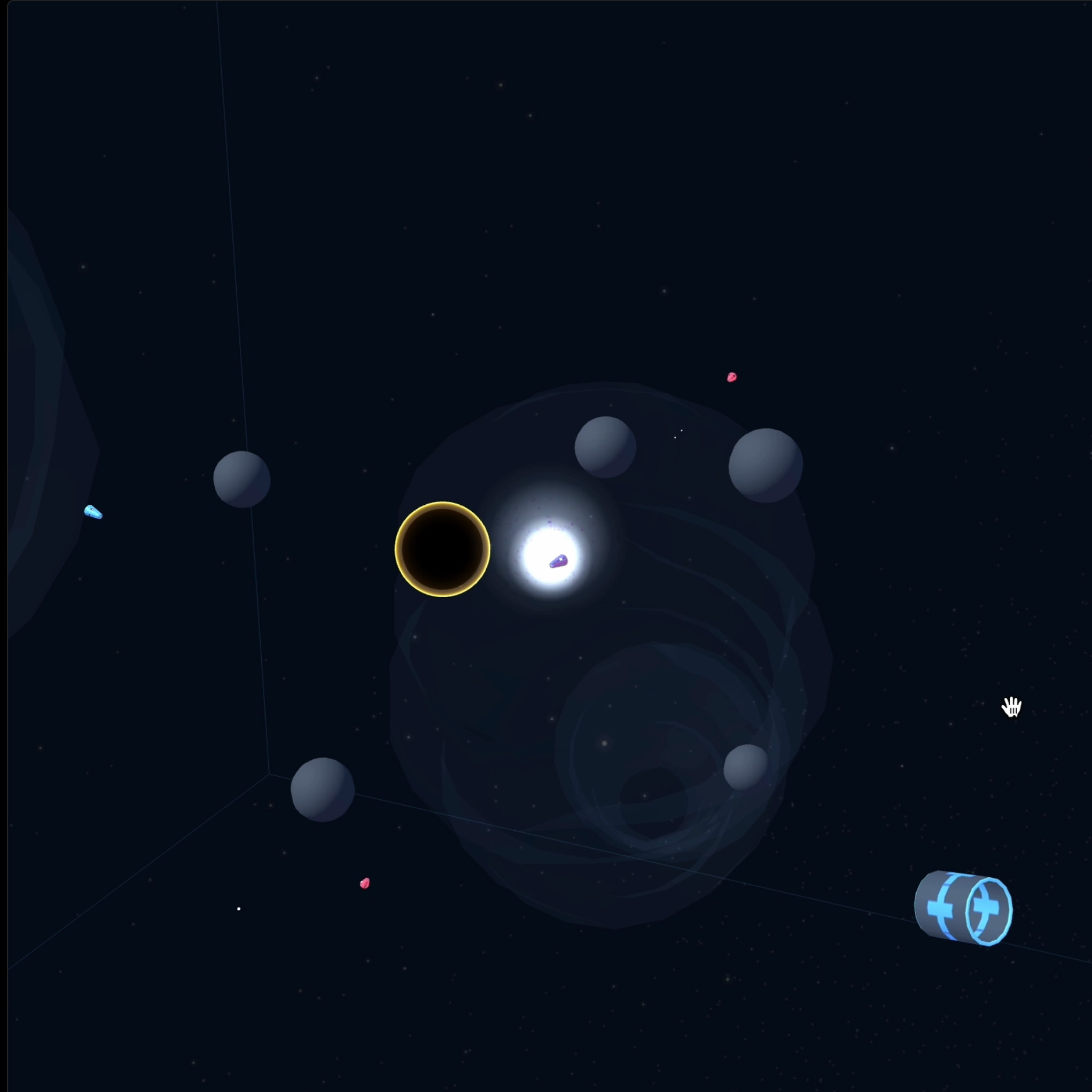
Algohol is an experimental, physics-based 3D game in which the player is an algorithm—or a team of algorithms. Instead of controlling the game directly, players design a game AI. The AI observes and interacts with the environment through an API.
The project shows what happens when programming, game design, physics simulation, and agentic development come together in a competitive arena. You can build algorithms using any language or technology that communicates with the API.
The current Sci-Fi and Space environments feature energy-based systems, physical constraints, multidimensional movement, and a range of tactical challenges. Terra plans to add traditional kinetic action across varied terrains in the future environment.
Real-time control requires fast and responsive algorithms, which makes current LLMs impractical as direct pilots. They can still play a useful role as high-level strategists and as tools for designing, testing, and iterating on control systems. The API supports this iterative workflow, while arena matches make it possible to compare algorithms across multiple performance metrics.
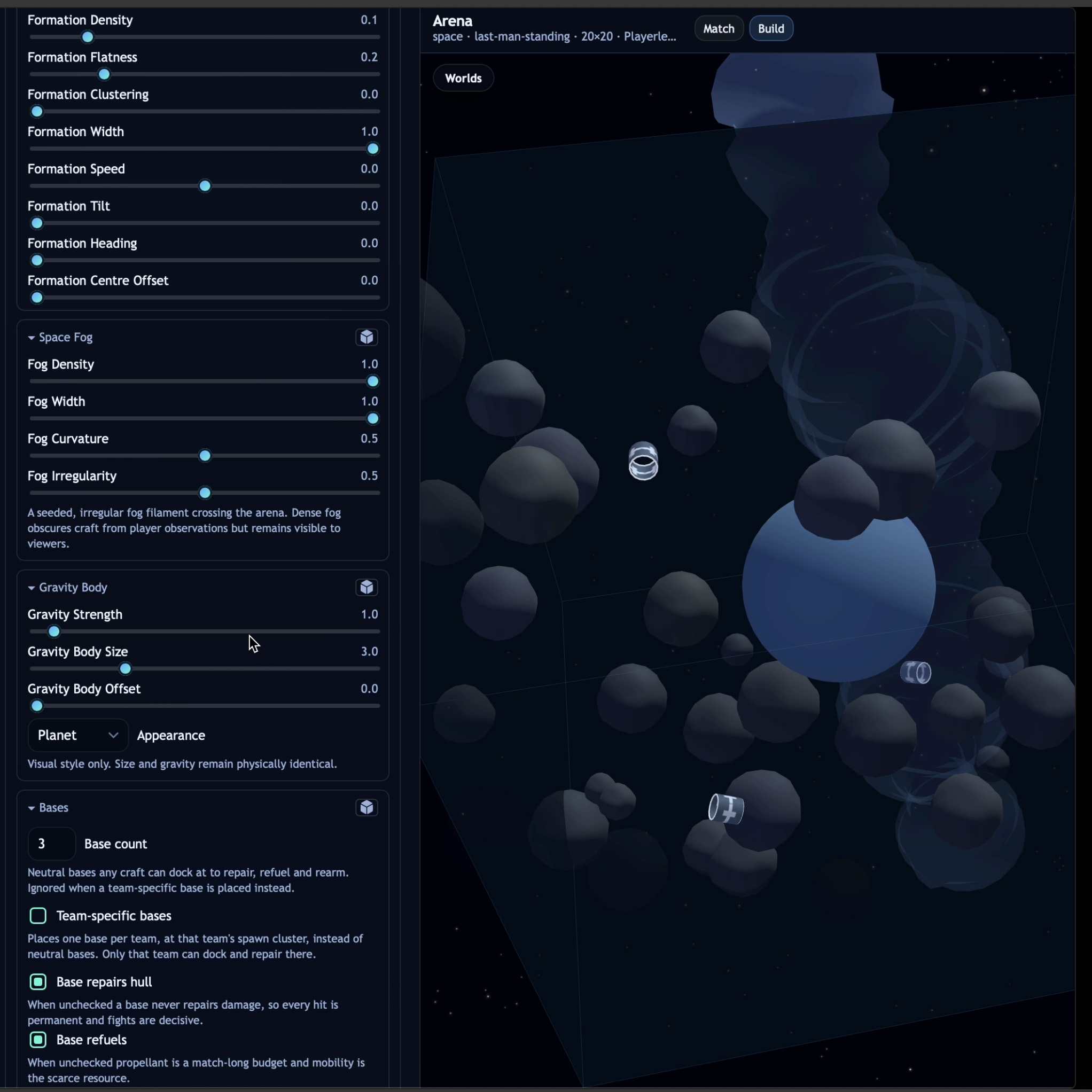
Each player receives a private arena they can freely modify and share with invited participants. Public arenas allow people to watch matches and assess how different approaches perform.
I developed Algohol as both a game concept and an experiment in agentic coding. Much of the implementation was created in collaboration with coding agents, particularly Claude and Codex in Visual Studio Code. The project gave me a concrete setting in which to explore AI-assisted software development, API design, real-time simulation, and the challenge of turning an unusual idea into a working system.
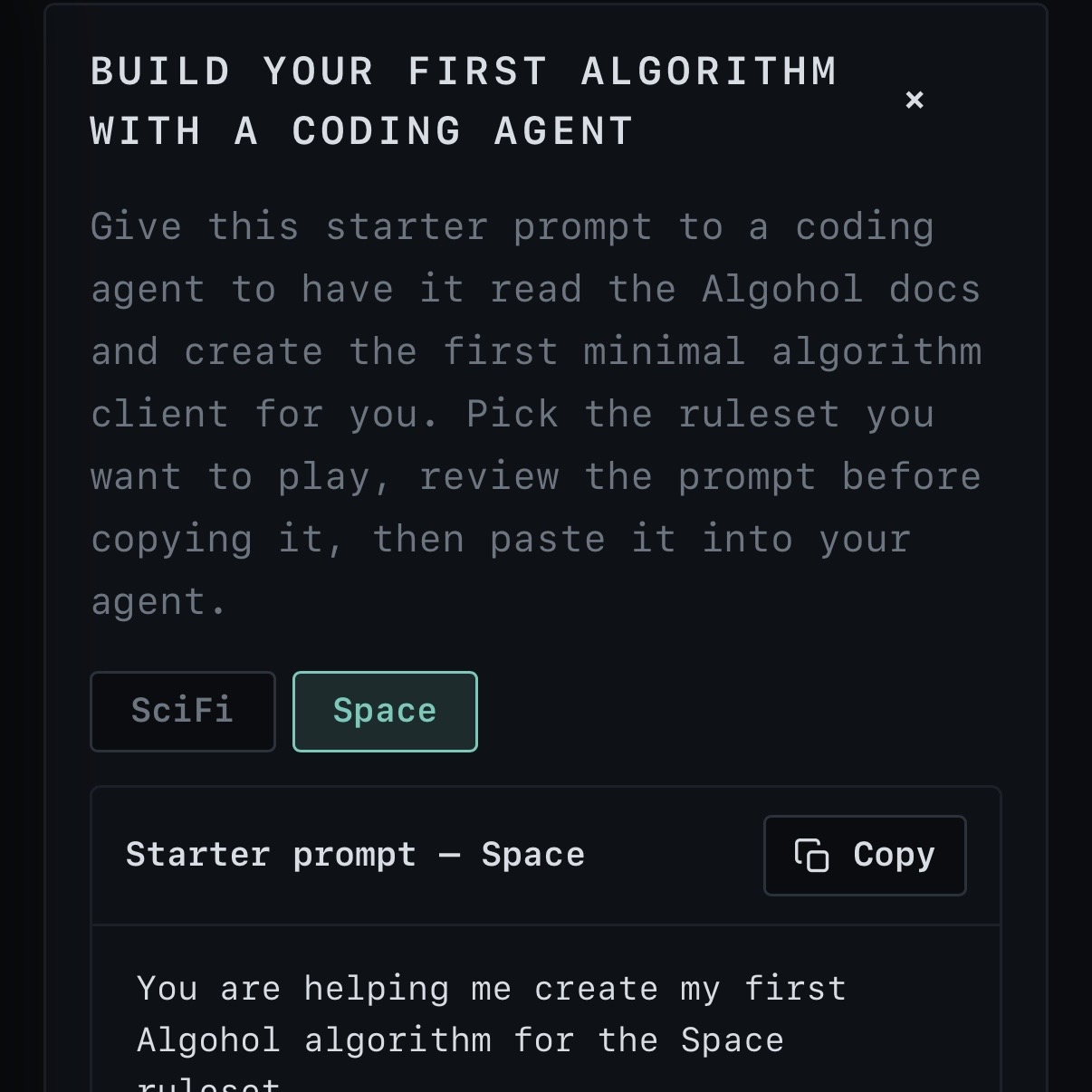
Algohol may also offer an approachable introduction to agentic coding: it provides a clear objective, visible results, and a playful environment for experimentation.
Explore the project:
https://algohol.net
Watch the public arenas:
https://arena.algohol.net
The documentation includes a starter prompt for creating a first algorithm:
https://docs.algohol.net/?doc=howtoplay-getting-started